Table of contents
Hide
Research Model of a Cuvette
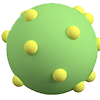
3D Scientific Model of a Petri Dish — C4D Source Files (RS Rendering)
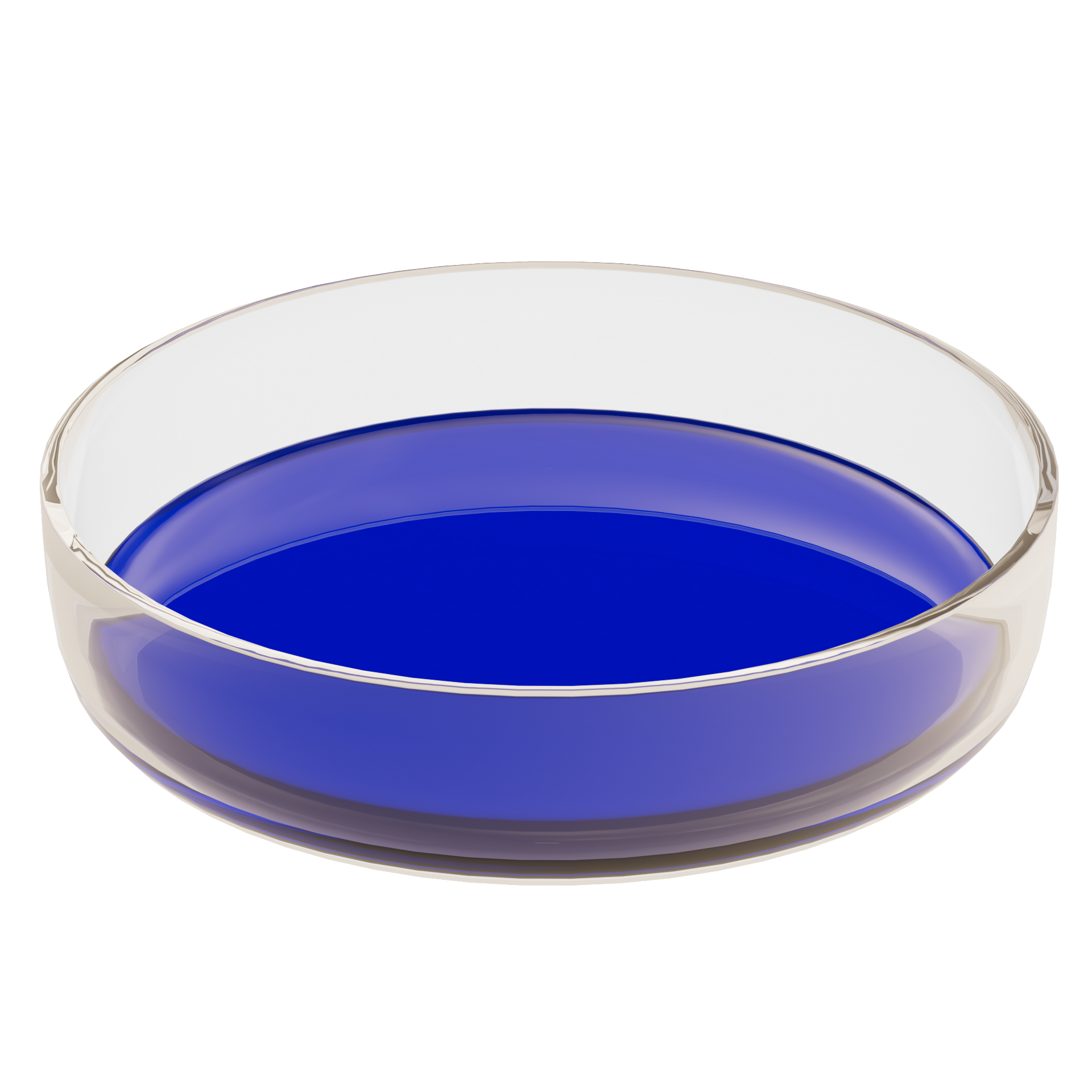
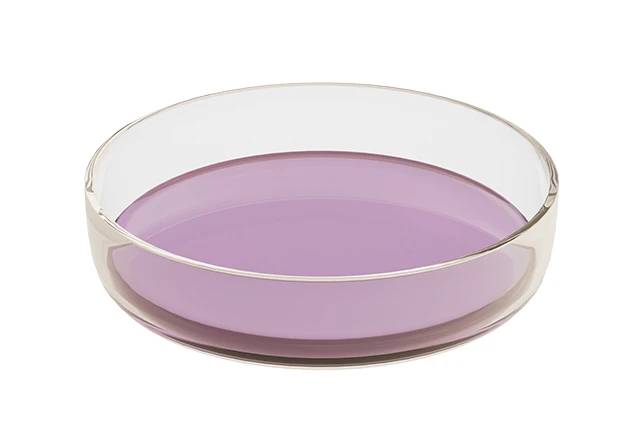
High-precision 3D model of a watchglass, C4D source file, rendered with Redshift, realistically recreating the crystal-clear texture of laboratory glassware to enhance scientific illustration and laboratory scene visualization.
📌 Model Overview
Watch glasses are among the most common glassware items in chemistry, biology, and pharmaceutical laboratories. They are widely used for the evaporation and concentration of trace samples, observing crystallization, weighing and holding solids, covering petri dishes, and performing small-scale experimental procedures under a microscope. Its classic shallow, concave, disc-shaped design not only facilitates observation of changes in samples but also offers excellent heat resistance and chemical stability. In scientific research papers, laboratory manuals, and laboratory safety materials, accurate three-dimensional depictions of watch glasses play a crucial supporting role in illustrating experimental procedures and instrumentation.
This model usesC4D (Cinema 4D) To construct the precise geometric shape of a weighing dish, useRedshift (RS) rendererThe rendering of materials and lighting faithfully reproduces the high light transmittance, refractive index, Fresnel edge effects, and subtle reflective textures characteristic of glass. The model features a simple and practical design; it can be used as a standalone asset or easily integrated into various laboratory settings, making itFigures in SCI Papers、Experimental Teaching Courseware、Schematic Diagram of the Instrument及Science Education ExhibitionHigh-quality 3D assets.
✨ Key Highlights
🧪 Precise design, exact proportions
The model was constructed based on the actual dimensions and geometric characteristics of a standard laboratory dish: it has a shallow, concave shape, slightly thickened edges, a smooth bottom surface, and features elegant, curved transitions throughout. The precise dimensional proportions ensure the model’s realism and authenticity within the scene.
✨ Glass-like texture, crystal-clear and lifelike
With the help ofRedshift GPU-accelerated renderer, featuring a meticulously formulated optical-grade glass material for the model, with precise control over key parameters such as the index of refraction (IOR), gloss, surface roughness, and transmitted color, perfectly recreating glass’s distinctive high light transmittance, Fresnel edge effects, and subtle ambient reflections, ensuring the model exhibits a realistic, crystalline texture under various lighting conditions.
📁 Source files are open and free to edit.
We provide complete C4D project files, including all material node networks, lighting systems, multiple camera angles, and rendering presets. You can freely adjust the glass color, transparency, surface texture, and material parameters as needed, and you can also create scenes featuring multiple glass dishes stacked, tilted, or filled with liquid.
🔄 Ready to use right out of the box, suitable for a variety of scenarios
Whether it’s a diagram of an experimental procedure, a group photo of laboratory instruments, or a 3D demonstration in a chemistry lab tutorial, this model can be quickly adapted. It’s ready to use right out of the box, saving a significant amount of modeling time.
📋 Technical Specifications
| Project | Specifications |
|---|---|
| software format | C4D (.c4d) |
| renderer | Redshift (RS) |
| Output Resolution | 4K Ultra HD (output can be customized to a higher resolution) |
| Document Content | 3D Models + Complete Materials + Lighting System + Camera Presets |
| Attached file | Multi-angle rendering previews (PNG format) |
| Applicable software | Cinema 4D R20 or later (Redshift 3.0+ recommended) |
| Applicable scenarios | Illustrations for academic papers, course material development, PowerPoint presentations, animation production, and science outreach exhibits |
🎯 Target Audience
- Chemistry, Biology, and MedicineResearchers and graduate students in the field
- Engage inLaboratory Instruction and Laboratory Safety Trainingeducators
- Needs to be madeSchematic Diagram of the Experimental Procedureacademics
- Scientific visualization designerand 3D modeling enthusiasts
- Creators of textbook illustrations, instrument manuals, and science education videos
🖼️ Preview display
This material is suitable for biochemistry scientific research, featuring high resolution. It was created using C4D (CINEMA 4D) software with the RS (RedShift) renderer. It is recommended to open this material with C4D, where you can freely adjust the model colors, display orientation, and other settings.
📥 How to Get It
Since digital products are considered special virtual items, refunds or exchanges are generally not permitted once they have been unlocked and downloaded. Please carefully review the type of product and terms of use before making a purchase.
Image assets only include PNG format
The source files include image assets, C4D format source files, and GLTF format files. The 3D source files need to be opened with C4D software, please confirm yours.Software version is greater than or equal to R20, too low of a Cinema 4D version might not be able to open it
You can achieve results consistent with this site by using the RedShift renderer. Other renderers can also be used, but due to differences in renderers and materials, the output will vary and you will need to adjust the materials and lighting according to your specific renderer.
Usage tips: To ensure optimal rendering results, please make sure your versions of C4D and Redshift are compatible. This resource is intended solely for academic research and personal study; it may not be used for commercial purposes without authorization.
Method 1
Creating artwork is no easy task,Stock ImagesPacked in the cloud drive, pay to unlock or upgrade to a junior or higher membership to download. Membership information can be found atIntroduction to the XC Membership System. Before paying, please make sure you understand the details of the above materials andDisclaimer of this site。
Files shared via cloud storage; links to image assets of shallow dishes:
 Basic Member
 Intermediate member
 Premium member
Source file materialPay to unlock or upgrade to an intermediate or higher membership to download.
Method 2
ClickLinkGet materials.
💬 About this model
Although a surface dish appears to have a simple structure, rendering the realistic appearance of glass is a classic challenge in 3D visualization. The focus of refining this model was on how to maintain geometric accuracy while finely adjusting material parameters to achieve the unique balance of transmission, refraction, and reflection characteristic of glass. During the model’s construction, we repeatedly fine-tuned parameters such as the glass material’s IOR, transmission depth, and gloss level to suit the characteristics of the Redshift renderer, striving to achieve optimal visual results under a variety of lighting conditions.
We are committed to providing the scientific community with high-quality 3D visualization resources. If you have any questions about our models or would like to request custom models of other laboratory equipment (such as beakers, graduated cylinders, test tubes, petri dishes, volumetric flasks, etc.), please feel free to contact us at any time. We are continuously updating our collection of scientific resources—stay tuned!
Making scientific visualization more realistic and efficient. 🧪✨
Modeled in Cinema 4D | Rendered with Redshift | Designed for Scientific Visualization