
multilayer core-shell microsphere 3D model

3D Model of Multilayer Core-Shell Microspheres | C4D + Redshift Scientific Resource Source Files | Specifically for Use as Illustrations or Covers in Research Papers
Asset name
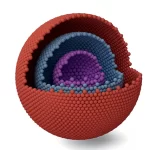
multilayer core-shell microsphere 3D model
Why do you need this set of models?
In illustrations accompanying research papers in the fields of materials science, biology, and chemical engineering, “core-shell structures” and “multilayer-assembled microspheres” are visual elements that appear with extremely high frequency. However, building these from scratch often presents challenges such as structural inaccuracies, lackluster materials, and time-consuming rendering.
This model was designed specifically to address these issues. It is not merely a stack of geometric shapes, but rather aIt renders an image as soon as you open it.A complete project. You can use it as is, or quickly modify the parameters to adapt it to your own material system, significantly reducing the time it takes to go from data to renderings.
Highlights of the Footage
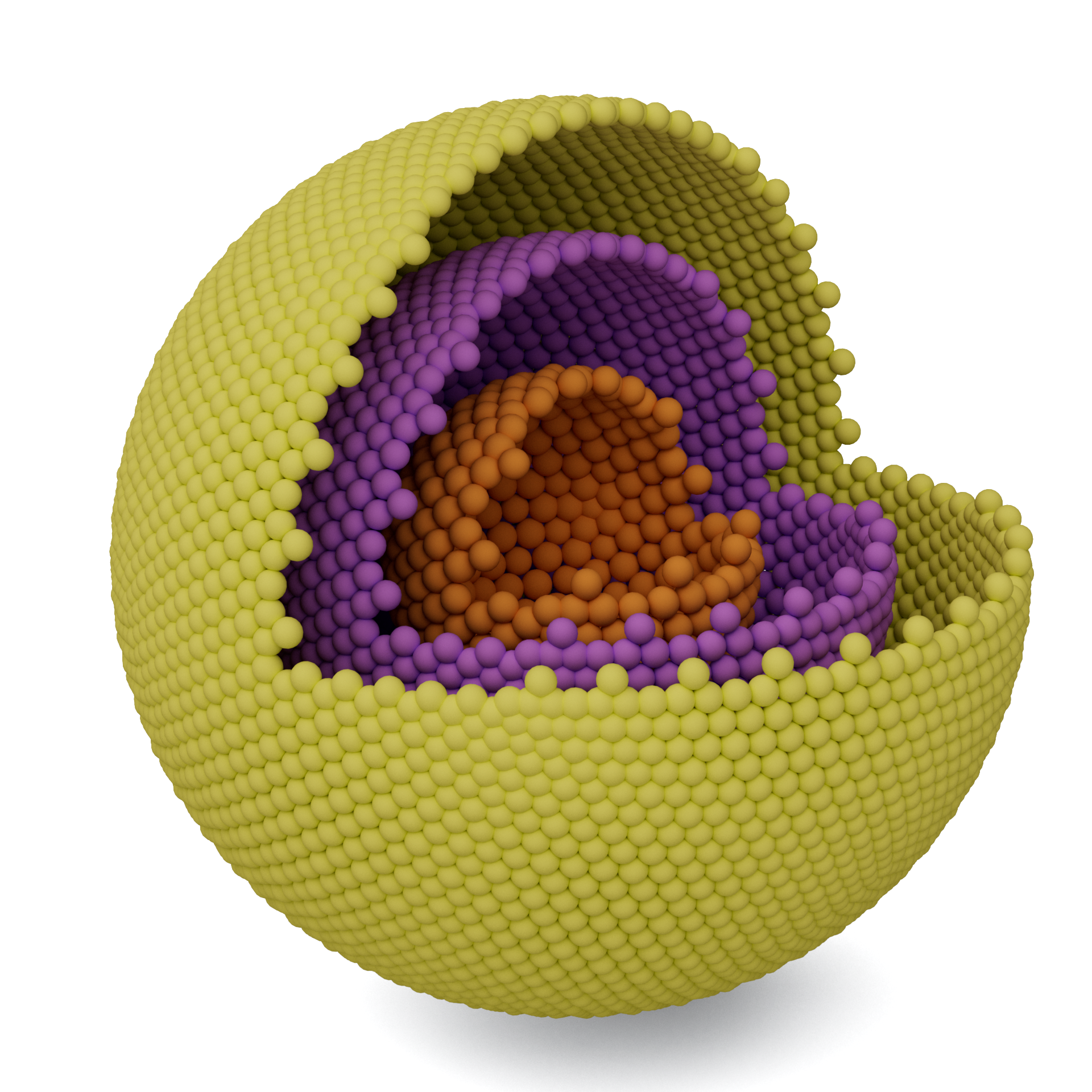
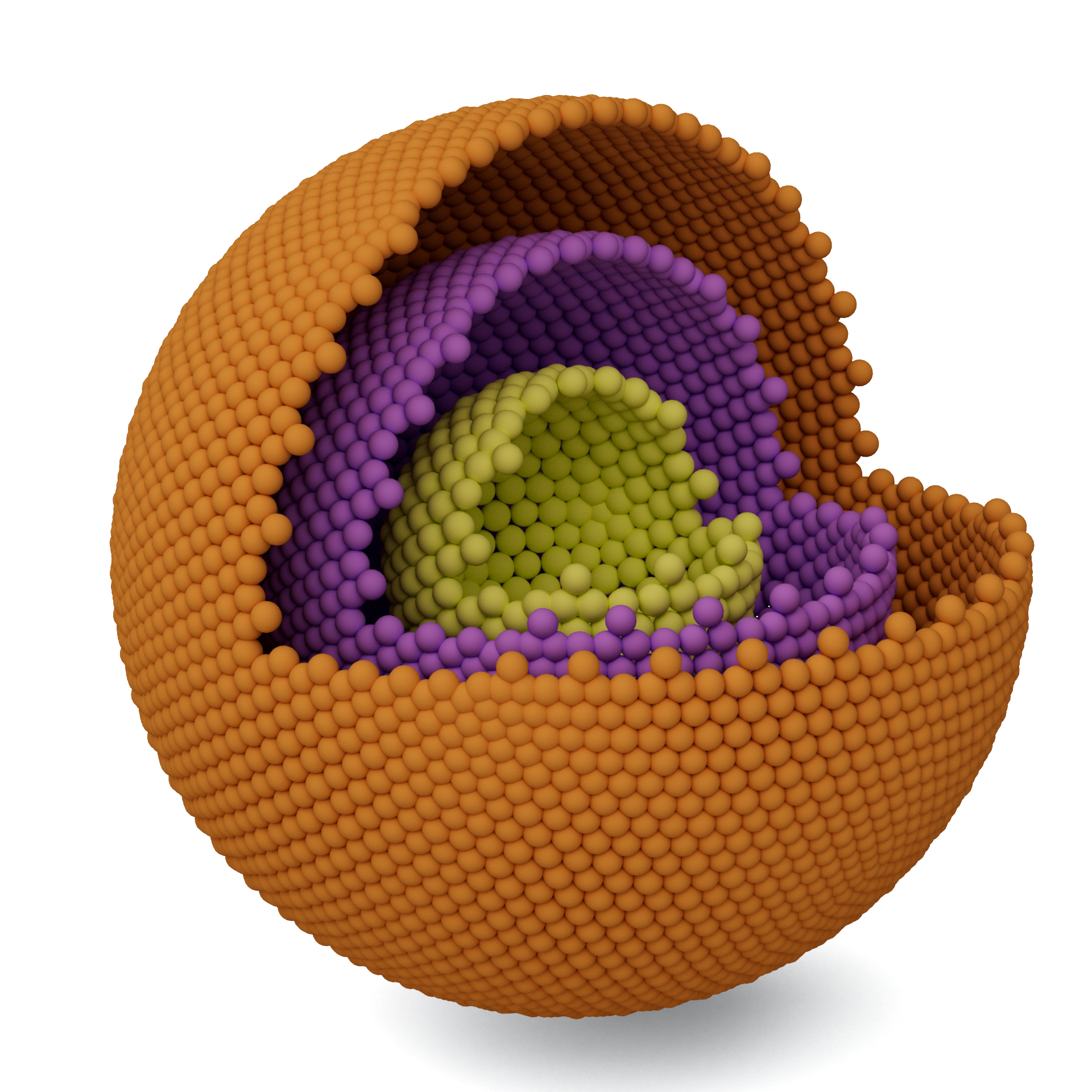
- Structural Science, Explained at a Glance: Precise radius ratios and half-section views clearly distinguish the core, intermediate layer, shell, and surface modification layer. The hemispherical section view is particularly well-suited for TOC diagrams, allowing reviewers and readers to understand the structure of your material without the need for lengthy textual explanations.
- High-quality materials, ready to use right out of the box: Includes 5 pre-calibrated Redshift material presets. Covers a wide range of scientific visualization needs across various color schemes; switch with a single click—no need to experiment with node parameters yourself.
- Lighting is set, and the image is crisp: Includes the RS lighting environment; rendering settings are locked to ensure that the output image has controlled noise and clean pixels, directly meeting the 300 dpi printing standard.
- Fully adjustable, flexible adaptation: Parametric modeling is retained. You can freely adjust the radius, shell thickness, particle size, and number of particles for each layer, and even change the colors, so that the model accurately reflects your experimental system.
What can you do with it?
- Submitting to a Journal Cover: Provide the basic structure for the cover image and adapt it to the journal’s style.
- Table of Contents/Abstract Image: Present the material design concept in a concise and intuitive way to enhance the first impression of your paper.
- Illustrations accompanying the review: Used to summarize the development or applications of microsphere structures in a particular field.
- Academic Presentation Slides/Posters: Make the structural presentation sections of group meeting reports and conference posters stand out even more.
- Grant Application: In the project justification or research proposal, the structure of the materials for the proposed work should be presented visually.
Reference for Applicable Fields
Drug-release carriers, hollow mesoporous silica, multilayer microcapsules, core-shell catalytic microspheres, MOF/COF hierarchical structures, upconversion luminescent microspheres, multifunctional diagnostic and therapeutic probes, etc.
Material Details
This material is suitable for biochemistry scientific research, featuring high resolution. It was created using C4D (CINEMA 4D) software with the RS (RedShift) renderer. It is recommended to open this material with C4D, where you can freely adjust the model colors, display orientation, and other settings.
Specifications
- Software: Cinema 4D
- Renderer: RedShift (RS)
- Format: .c4d source file
- Resolution: High Definition, suitable for printing
How to get
Since digital products are considered special virtual items, refunds or exchanges are generally not permitted once they have been unlocked and downloaded. Please carefully review the type of product and terms of use before making a purchase.
Image assets only include PNG format
The source files include image assets, C4D format source files, and GLTF format files. The 3D source files need to be opened with C4D software, please confirm yours.Software version is greater than or equal to R20, too low of a Cinema 4D version might not be able to open it
You can achieve results consistent with this site by using the RedShift renderer. Other renderers can also be used, but due to differences in renderers and materials, the output will vary and you will need to adjust the materials and lighting according to your specific renderer.
Method 1
Creating artwork is no easy task,Stock ImagesPacked in the cloud drive, pay to unlock or upgrade to a junior or higher membership to download. Membership information can be found atIntroduction to the XC Membership System. Before paying, please make sure you understand the details of the above materials andDisclaimer of this site。
Files shared via cloud storage: Link to multi-layered microsphere image assets:
 Basic Member
 Intermediate member
 Premium member
Source file materialPay to unlock or upgrade to an intermediate or higher membership to download.
Method 2
ClickLinkGet materials.
Terms of Use and Copyright
Before use, please ensure that C4D and the RedShift renderer are installed. For best results, we recommend saving a backup of the original file before adjusting the settings. If texture paths are missing, please check that RedShift is installed correctly.
Friendly Academic License:
✔ Can be used for figures in papers, cover submissions, theses, academic presentations, and grant illustrations by individuals or research groups.
✘ You may not redistribute, resell, or upload the source files or fine-tuned models as “assets” to paid platforms.
Citing the source of the model in your paper is a great encouragement to us, but it is not a requirement.
More Recommendations
This blog regularly shares popular 3D scientific resources. Follow our WeChat official account and Taobao store to stay updated. Thank you!