
Table of contents
Hide
red blood cell model

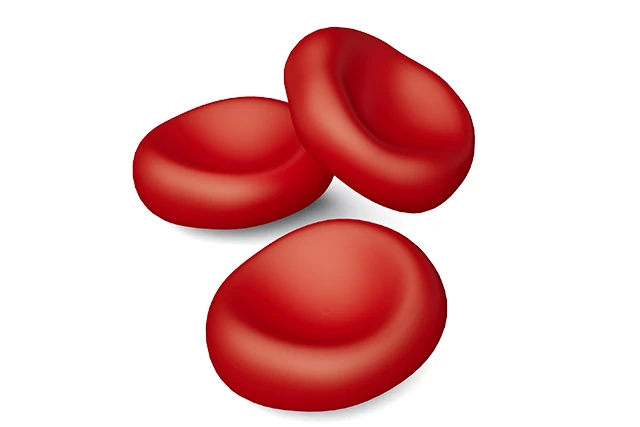
3D Scientific Model of a Red Blood Cell — C4D Source Files (RS Rendering)
High-precision 3D model of a red blood cell, with source files in C4D format and rendered using Redshift, perfectly capturing the classic biconcave disc shape and enabling scientific visualization in the fields of hematology, biomechanics, and drug delivery.
📌 Model Overview
Erythrocytes (red blood cells) are the most abundant blood cells in the human body. Their unique biconcave disc shape gives them an extremely high surface-to-volume ratio, ensuring efficient gas exchange while also endowing the cells with exceptional deformability, allowing them to pass smoothly through capillaries with diameters far smaller than their own. Abnormal red blood cell morphology is often closely associated with various blood disorders, such as sickle cell anemia and hereditary spherocytosis. Therefore, high-quality three-dimensional models of red blood cells serve as indispensable foundational resources for scientific visualization in fields such as hematology, biophysics, microcirculation research, and drug carrier development.
This model usesC4D (Cinema 4D) Accurately replicate the characteristic biconcave disc shape of red blood cells usingRedshift (RS) rendererWith material and lighting rendering completed, the model realistically reproduces the physiological morphological features and optobiological properties of red blood cells. The model can be used asFigures in SCI Papers、Academic Presentation、Science Education Exhibition及Animation ProductionThe core visual elements, which combine scientific accuracy with visual appeal.
✨ Key Highlights
🔴 Precise in form, true to life
The model was constructed strictly in accordance with the classic biconcave disc shape of red blood cells: the central concave region is flat and relatively thin, while the edges are raised and thickened, resulting in a perfectly axially symmetrical structure. The ratio of cell diameter to thickness is based on actual physiological data, ensuring the model’s scientific validity as a reference.
🩸 Made from high-quality materials with a realistic feel
With the help ofRedshift GPU-accelerated renderer...The model features a carefully crafted, translucent material specific to red blood cells, which reproduces the natural reddish luster of hemoglobin and the scattering of light. The material parameters were fine-tuned through repeated adjustments to simulate the typical optical characteristics of red blood cells as seen under a microscope.
📁 Source files are open and free to edit.
Complete C4D project files are provided, including all material node networks, lighting systems, multiple camera angles, and rendering presets. You can freely adjust the cell colors, transparency, surface textures, and material parameters as needed. You can also create animations of red blood cells deforming (e.g., as they pass through capillaries), aggregating into a coin-like pattern, or in multi-cell scenes.
🔄 Ready to use right out of the box, suitable for a variety of scenarios
Whether it's a schematic of a blood smear, a simulation of intravascular blood flow dynamics, or a design presentation for drug carriers (such as red blood cell-based carriers), this model can be quickly adapted. It's ready to use right out of the box, significantly reducing modeling time.
📋 Technical Specifications
| Project | Specifications |
|---|---|
| software format | C4D (.c4d) |
| renderer | Redshift (RS) |
| Output Resolution | 4K Ultra HD (output can be customized to a higher resolution) |
| Document Content | 3D Models + Complete Materials + Lighting System + Camera Presets |
| Attached file | Multi-angle rendering previews (PNG format) |
| Applicable software | Cinema 4D R20 or later (Redshift 3.0+ recommended) |
| Applicable scenarios | Illustrations for academic papers, cover design, PowerPoint presentations, animation production, and science outreach exhibits |
🎯 Target Audience
- Hematology, Biomedical EngineeringResearchers and graduate students in the field
- Engage inMicrocirculation, Biomechanics, Drug Delivery SystemsThe team conducting related research
- Needs to be madeSchematic Diagram of the Blood Systemacademics
- Scientific visualization designerand 3D modeling enthusiasts
- Creator of journal covers, illustrated abstracts, grant proposals, and medical popular science materials
🖼️ Preview display
This material is suitable for biochemistry scientific research, featuring high resolution. It was created using C4D (CINEMA 4D) software with the RS (RedShift) renderer. It is recommended to open this material with C4D, where you can freely adjust the model colors, display orientation, and other settings.


📥 How to Get It
Since digital products are considered special virtual items, refunds or exchanges are generally not permitted once they have been unlocked and downloaded. Please carefully review the type of product and terms of use before making a purchase.
Image assets only include PNG format
The source files include image assets, C4D format source files, and GLTF format files. The 3D source files need to be opened with C4D software, please confirm yours.Software version is greater than or equal to R20, too low of a Cinema 4D version might not be able to open it
You can achieve results consistent with this site by using the RedShift renderer. Other renderers can also be used, but due to differences in renderers and materials, the output will vary and you will need to adjust the materials and lighting according to your specific renderer.
Usage tips: To ensure optimal rendering results, please make sure your versions of C4D and Redshift are compatible. This resource is intended solely for academic research and personal study; it may not be used for commercial purposes without authorization.
Method 1
Creating artwork is no easy task,Stock ImagesPacked in the cloud drive, pay to unlock or upgrade to a junior or higher membership to download. Membership information can be found atIntroduction to the XC Membership System. Before paying, please make sure you understand the details of the above materials andDisclaimer of this site。
Files shared via cloud storage: Link to red blood cell image assets:
 Basic Member
 Intermediate member
 Premium member
Source file materialPay to unlock or upgrade to an intermediate or higher membership to download.
Method 2
ClickLinkGet materials.
Terms of Use and Copyright
Before use, please ensure that C4D and the RedShift renderer are installed. For best results, we recommend saving a backup of the original file before adjusting the settings. If texture paths are missing, please check that RedShift is installed correctly.
Friendly Academic License:
✔ Can be used for figures in papers, cover submissions, theses, academic presentations, and grant illustrations by individuals or research groups.
✘ You may not redistribute, resell, or upload the source files or fine-tuned models as “assets” to paid platforms.
Citing the source of the model in your paper is a great encouragement to us, but it is not a requirement.
💬 About this model
Although the biconcave disc shape of a red blood cell appears simple, achieving natural transitions in surface curvature, uniform edge thickness, and a smooth central indentation in 3D modeling is no easy task. During the construction of this model, a technical approach combining rotated surfaces and subdivided surfaces was employed. After multiple rounds of fine-tuning the geometry, the outline from every angle was ensured to conform to physiological characteristics. At the same time, meticulous tuning of the Redshift materials ensures that the rendered model achieves both scientific accuracy and visual appeal.
We are committed to providing the scientific community with high-quality 3D visualization resources. If you have any questions about the models or need custom blood cell or biological models (such as white blood cells, platelets, blood vessels, tissues, or organs), please feel free to contact us at any time. We are continuously updating our collection of scientific resources, so stay tuned!
Making scientific visualization more detailed and professional. 🔴✨
Modeled in Cinema 4D | Rendered with Redshift | Designed for XC Research